
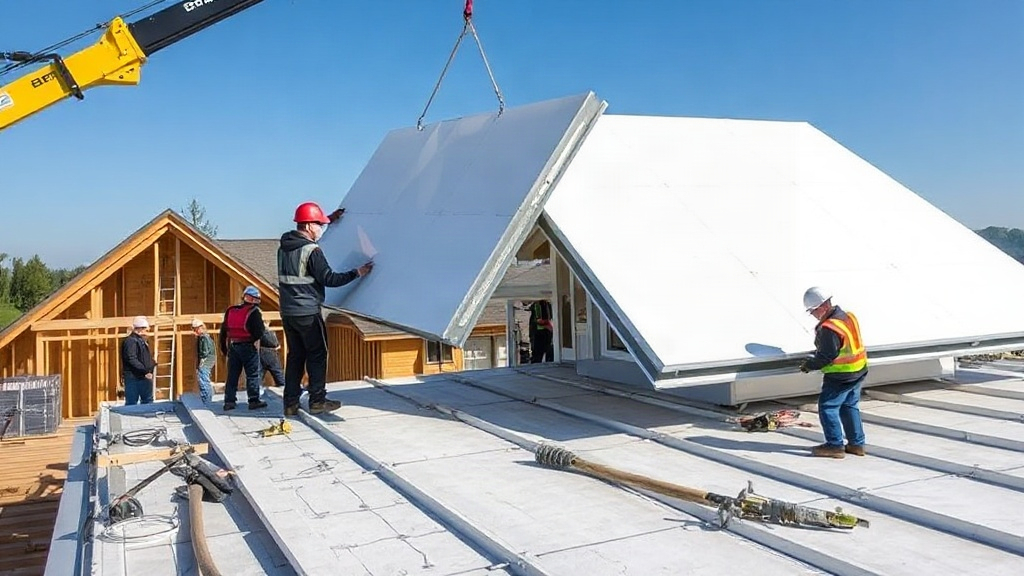
When you're staring at a roof that leaks heat in winter and bakes your attic in summer, the solution isn't just another layer of shingles. It's a system. After two decades in construction, I've watched insulated roof panels evolve from a niche product to a mainstream choice for builders who care about performance. The secret often lies in the core material, and that's where EPS insulation shines. Combined with advanced manufacturing, sandwich panels Canada wide are changing how we think about roofs, walls, and entire building envelopes.
Why Insulated Roof Panels Outperform Traditional Roofing
Traditional roofing relies on layers: sheathing, underlayment, insulation batts, and a finished surface. Each layer adds labor, potential failure points, and thermal bridging. Insulated roof panels, by contrast, are engineered composites. They typically consist of an insulating foam core bonded between two structural skins, often metal or oriented strand board. The result is a monolithic panel that insulates and supports loads simultaneously.
In my own projects, switching to these panels cut installation time by nearly 40%. Crews handle fewer materials, and there's no need to vent an attic because the insulation sits above the deck. That means your conditioned space stays cleaner and more comfortable. For anyone specifying insulated roof panels, the upfront cost is higher, but the long-term savings on energy and maintenance are undeniable.
The Role of EPS Insulation in Modern Panels
EPS insulation, or expanded polystyrene, is a rigid foam made from styrene beads expanded with steam. It's lightweight, affordable, and has a consistent R-value of about 3.8 to 4.4 per inch. Unlike polyurethane or polyisocyanurate, EPS doesn't off-gas or degrade when exposed to moisture. That stability makes it ideal for roof panels in humid or coastal climates.
I've installed EPS-cored panels in everything from a Vancouver Island boathouse to a Toronto laneway suite. In each case, the panels resisted moisture migration and maintained their thermal performance year after year. Plus, EPS is recyclable, which appeals to clients pursuing green building certifications. When you pair EPS insulation with a steel skin, you get a vapor barrier, structural support, and insulation in one product.
Sandwich Panels Canada: Regional Advantages and Considerations
Canada's climate is a stress test for any building product. From the freezing prairies to the wet West Coast, roofs must handle extreme temperature swings, snow loads, and wind-driven rain. That's why sandwich panels Canada manufacturers have developed specialized profiles and thicknesses. A panel that works in Victoria may not meet snow load requirements in Winnipeg.
When sourcing panels, I always check for Canadian Standards Association (CSA) certification and local building code compliance. Many Canadian suppliers offer panels with polyurethane or EPS cores, but EPS remains popular because it doesn't lose R-value at low temperatures. In fact, EPS performs better in cold climates than some higher-R foams that suffer from thermal drift.
Installation Tips for Canadian Climates
Installing insulated roof panels in Canada requires attention to thermal bridging and air sealing. Here are lessons I've learned the hard way:
- Always use a continuous air barrier. Even the best panel fails if seams leak.
- Allow for expansion and contraction. Metal skins move with temperature; fasteners should permit slight movement.
- Choose the right thickness. In Ontario, R-30 is common for roofs; in northern territories, aim for R-40 or higher.
- Seal penetrations immediately. Vents, chimneys, and skylights are prime spots for water intrusion.
One project in Halifax taught me to double-check panel orientation. We initially installed panels with the tongue facing the wrong way, causing a leak during a nor'easter. A quick reversal solved it, but the lesson stuck: follow the manufacturer's layout exactly.
How EPS Insulation Enhances Sandwich Panel Performance
Not all sandwich panels are created equal. The bond between the EPS core and the facings is critical. If the adhesive fails, the panel delaminates and loses structural integrity. High-quality manufacturers use a heat-activated adhesive that creates a chemical bond, not just a mechanical one. When I cut into a sample from a reputable supplier, I look for foam that tears before the bond breaks. That's a good sign.
Another advantage of EPS is its moisture resistance. Unlike fiberglass, which can trap water and lose R-value, EPS doesn't absorb water. If a panel is compromised, the insulation stays dry and effective. That's why EPS insulation is my go-to for roof panels in high-humidity areas like indoor pools or agricultural buildings.
Energy Efficiency and Cost Savings
Let's talk numbers. A typical 2,000-square-foot home with a traditional roof might have R-20 insulation, while an EPS sandwich panel roof can easily achieve R-40. That difference can cut heating and cooling costs by 30% or more, depending on your climate. Over 20 years, the savings can exceed the initial price premium.
I also appreciate that these panels reduce the load on HVAC systems. Smaller equipment means lower upfront costs and less maintenance. For commercial buildings, the payback period is often under five years. With energy codes tightening across Canada, insulated roof panels are becoming the default choice for specifiers.
Choosing the Right Panel for Your Project
Before you order, answer these questions:
- What is the required R-value for your climate zone?
- What snow and wind loads must the roof withstand?
- Will the panels be exposed to chemicals or moisture?
- Do you need a fire-rated assembly?
For residential roofs, a 4-inch EPS panel with a steel skin is often sufficient. For commercial or industrial buildings, thicker panels with standing-seam profiles provide better weather resistance. Always request test data for fire, wind uplift, and structural performance. A reputable supplier will provide third-party reports.
Common Mistakes to Avoid
Even experienced builders slip up. Here are pitfalls I've seen:
- Using panels as a structural diaphragm without proper engineering.
- Ignoring thermal expansion at panel joints.
- Mixing panels from different manufacturers, which can lead to incompatible profiles.
- Skipping a moisture barrier under the panels in high-humidity areas.
One client tried to save money by using thinner panels than specified. The result was condensation on the interior during winter, leading to mold. We had to remove and replace the entire roof. Don't cut corners on thickness or quality.
Frequently Asked Questions
What is the difference between EPS and polyurethane insulation in roof panels?
EPS offers consistent R-value, moisture resistance, and lower cost. Polyurethane has a higher R-value per inch but can be more expensive and may off-gas. For most residential and light commercial roofs, EPS is the better value.
Can insulated roof panels be installed over an existing roof?
Yes, many panel systems can be retrofitted over existing structures, provided the framing can handle the additional load. However, it's often more cost-effective to remove old roofing first to inspect the deck.
How do sandwich panels from Canada handle snow loads?
Canadian manufacturers design panels to meet provincial snow load requirements, which can exceed 50 psf in some regions. Always verify the panel's span and load tables for your location.
Are EPS insulated roof panels environmentally friendly?
EPS is recyclable and has a lower embodied energy than many alternatives. It also improves building energy efficiency, reducing operational carbon. Some manufacturers offer panels with recycled content.
What maintenance do insulated roof panels require?
Minimal. Inspect seams and fasteners annually, and clean the surface to prevent debris buildup. Unlike shingles, they don't need replacement every 15 to 20 years.
Choosing the right insulated roof panels is an investment in comfort, efficiency, and durability. Whether you're building in Canada or elsewhere, the combination of EPS insulation and quality sandwich panels Canada wide offers a proven path to a better roof. Do your homework, work with trusted suppliers, and you'll reap the benefits for decades.