
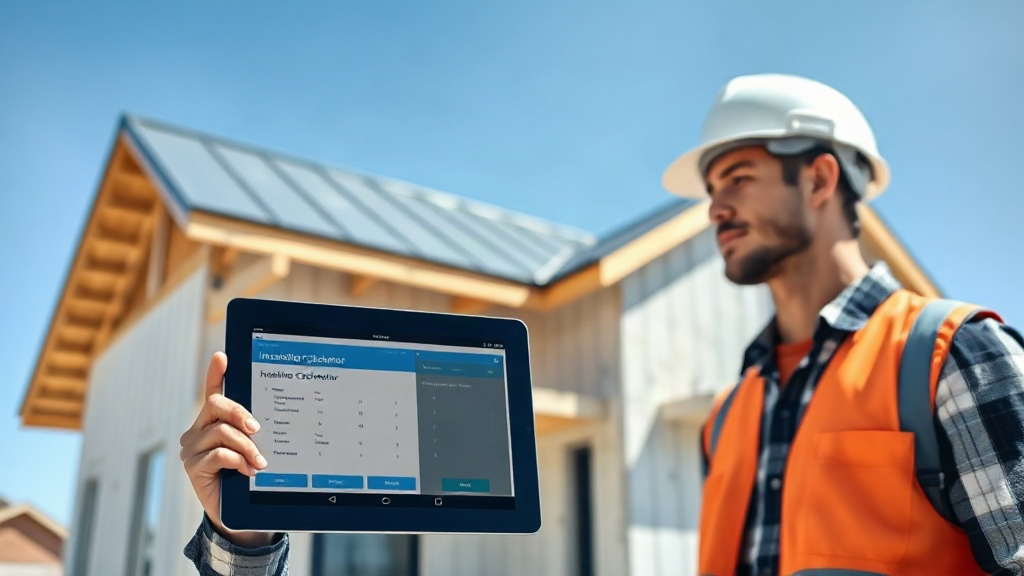
If you're planning a construction or renovation project, you've probably heard about EPS insulation. It's a popular choice for its affordability and thermal performance. But how do you know how much you need and what savings to expect? That's where an EPS insulation calculator comes in. This tool helps you estimate material quantities and potential energy savings, making your project planning smoother. In this article, we'll walk you through using such a calculator, explain the benefits of EPS insulation, and show how it pairs with insulated roof panels for optimal efficiency.
What Is EPS Insulation and Why Does It Matter?
EPS stands for Expanded Polystyrene. It's a lightweight, rigid foam made from polystyrene beads expanded with steam. The result is a material with millions of tiny air pockets that resist heat flow. Because of this structure, EPS insulation offers excellent thermal resistance, known as R-value, at a low cost. It's used in walls, roofs, and floors to reduce heat transfer, keeping buildings warmer in winter and cooler in summer.
Beyond thermal performance, EPS is moisture-resistant, durable, and easy to install. It doesn't absorb water, so it maintains its insulating properties over time. It's also environmentally friendly in many cases, as it can be recycled. For these reasons, EPS has become a go-to insulation for energy-conscious builders and homeowners.
How an EPS Insulation Calculator Works
An EPS insulation calculator is a simple tool that helps you determine the amount of EPS you need and the potential energy savings. It typically requires a few inputs:
- Area to insulate: Measure the square footage of walls, roof, or floor you plan to cover.
- Desired R-value: The higher the R-value, the better the insulation. Common targets range from R-10 to R-30, depending on climate and building codes.
- Thickness of EPS: EPS comes in various thicknesses, each with a specific R-value per inch (about R-4 per inch).
- Local energy costs: Electricity or fuel rates to estimate savings.
- Climate data: Heating and cooling degree days for your region.
Once you input these details, the calculator outputs the number of panels or boards needed, total cost, and estimated annual savings. It's a great way to budget and compare insulation options.
Step-by-Step: Using the Calculator for Your Project
Let's walk through a typical calculation. Suppose you're insulating a 1,000 square foot attic in a moderate climate. You want an R-value of 20. Since EPS provides about R-4 per inch, you'll need 5 inches of thickness.
- Measure the area: 1,000 sq ft.
- Determine thickness: 5 inches (for R-20).
- Calculate volume: 1,000 sq ft * (5/12) ft = 416.67 cubic feet.
- Convert to boards: If using 4 ft x 8 ft boards (32 sq ft each), you need 1,000 / 32 = 31.25 boards, so 32 boards.
- Estimate cost: If each board costs $20, total material cost is $640.
- Estimate savings: The calculator might show annual heating/cooling savings of $200, giving a payback period of about 3.2 years.
This is a simplified example, but it shows how the calculator can guide your decisions. Many online calculators automate these steps and even account for labor costs.
Maximizing Savings with EPS Insulation and Insulated Roof Panels
While EPS insulation alone is effective, combining it with insulated roof panels can significantly boost your building's energy efficiency. Insulated roof panels, also known as sandwich panels, consist of an insulating core (often EPS) sandwiched between two rigid facings. They provide continuous insulation, eliminating thermal bridging and reducing air leakage.
Using insulated roof panels with EPS cores offers several advantages:
- Superior thermal performance: The continuous layer of EPS minimizes heat transfer.
- Faster installation: Panels are prefabricated and easy to install, saving labor time.
- Durability: The facings protect the EPS from moisture and physical damage.
- Aesthetic flexibility: Panels come in various finishes to match your design.
When planning your insulation, consider using an EPS insulation calculator to determine the thickness needed for your roof panels. This ensures you meet building codes and maximize energy savings.
Common Mistakes to Avoid When Using an EPS Insulation Calculator
Even with a calculator, errors can happen. Here are pitfalls to watch for:
- Incorrect area measurement: Always measure twice, especially for irregular shapes.
- Overlooking thermal bridging: The calculator may not account for gaps; use continuous insulation like insulated roof panels to mitigate.
- Ignoring local climate: Savings estimates vary greatly by region; use climate-specific data.
- Forgetting installation costs: Some calculators focus on material only; factor in labor if hiring a pro.
- Choosing the wrong R-value: Consult local building codes for minimum requirements.
By avoiding these mistakes, you'll get a more accurate estimate and better results.
Frequently Asked Questions
How do I calculate the R-value of EPS insulation?
EPS typically has an R-value of about 4 per inch of thickness. So, if you have 2 inches of EPS, the R-value is approximately 8. To achieve a specific R-value, divide the target R-value by 4 to get the required thickness in inches.
Can I use an EPS insulation calculator for roof panels?
Yes, but you'll need to know the panel's insulation thickness and the area to cover. Many manufacturers provide calculators specific to their insulated roof panels. Alternatively, use a general calculator and adjust for the panel's R-value.
What is the payback period for EPS insulation?
It depends on energy costs, climate, and insulation thickness. Typically, payback ranges from 2 to 5 years for attic insulation. Using an EPS insulation calculator with local energy rates gives a more precise estimate.
Is EPS insulation environmentally friendly?
EPS is recyclable and has a lower environmental impact compared to some other insulation materials. It also reduces energy consumption, lowering carbon emissions over time.
How does EPS compare to other insulation types?
EPS is cost-effective and offers good thermal performance. It's less expensive than polyurethane or XPS but has a slightly lower R-value per inch. For many projects, it provides the best balance of cost and efficiency.
In conclusion, an EPS insulation calculator is a valuable tool for planning your insulation project. It helps you estimate materials and savings, ensuring you make informed decisions. Whether you're insulating walls or opting for insulated roof panels, EPS offers a reliable, efficient solution. Start calculating today and take a step toward a more energy-efficient building.