
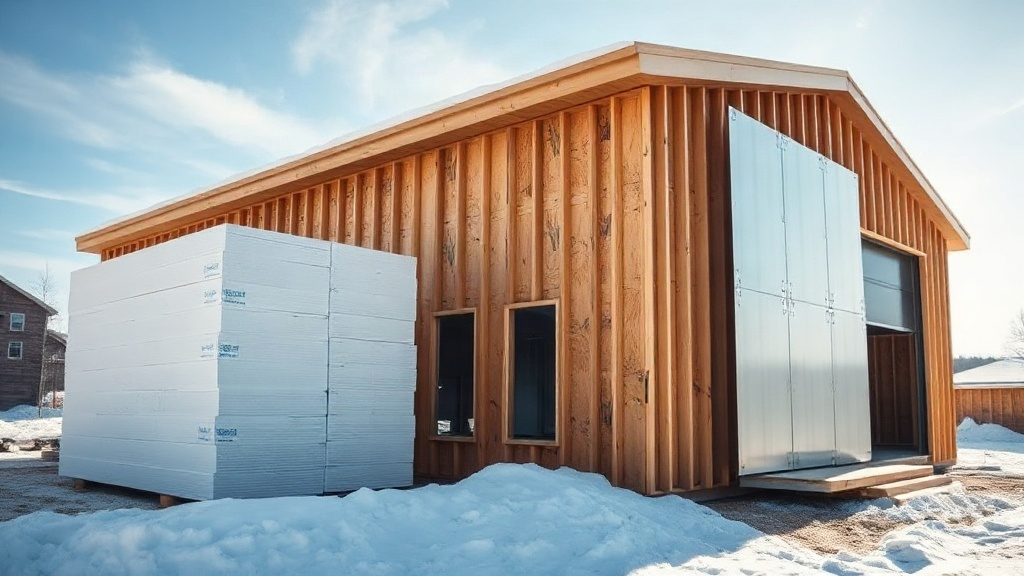
When you're planning a building project in Canada, whether it's a new home, a commercial warehouse, or an agricultural facility, you'll quickly discover that insulation choices can make or break your budget and comfort. Two popular options dominate the conversation: traditional eps insulation and prefabricated sandwich panels canada. Each has its own strengths, and the right pick depends on your specific needs, climate zone, and timeline. In this article, we'll break down the differences, share real-world insights, and help you decide which system suits your project best.
What Is EPS Insulation and How Does It Work?
EPS, or expanded polystyrene, is a rigid foam insulation made from tiny polystyrene beads expanded with steam and molded into boards. It's lightweight, affordable, and boasts a consistent R-value of about R-4 per inch. Builders across Canada use EPS in walls, roofs, and foundations because it resists moisture, doesn't degrade over time, and is easy to cut and install on site.
Key Benefits of EPS Insulation
- Cost-effective: EPS typically costs less per R-value than polyiso or XPS.
- Moisture resistant: Closed-cell structure limits water absorption.
- Versatile: Fits irregular spaces and can be layered for higher R-values.
- Eco-friendly: Recyclable and free of HCFCs.
What Are Sandwich Panels and Why Are They Popular in Canada?
Sandwich panels canada refers to factory-made panels consisting of an insulating core (often EPS, polyurethane, or mineral wool) bonded between two structural facings, typically metal or oriented strand board (OSB). These panels are engineered for rapid assembly and superior thermal performance. In Canada's harsh climate, they're a go-to for cold storage, warehouses, and even residential retrofits because they minimize thermal bridging and air leakage.
Advantages of Sandwich Panels
- Fast installation: Panels arrive pre-cut and ready to assemble, cutting labor time by up to 50%.
- High R-value: EPS-cored panels achieve R-4 per inch, but continuous insulation eliminates gaps.
- Durability: Steel facings resist impact, pests, and weather.
- Design flexibility: Available in various thicknesses and finishes.
Insulated Roof Panels: The Overlooked Hero
When discussing insulation, roofs often get less attention than walls, yet they account for a significant portion of heat loss. Insulated roof panels are a specialized type of sandwich panel designed for roof applications. They combine structural strength with insulation, often using EPS or polyurethane cores. In Canada, where snow loads are heavy, these panels must meet strict building codes for load-bearing capacity. They offer a seamless, energy-efficient roofing solution that can be installed quickly, reducing downtime and labor costs.
Why Choose Insulated Roof Panels?
- Energy savings: Minimize heat transfer and lower heating bills.
- Weather tightness: Interlocking joints prevent leaks.
- Long lifespan: Resistant to rot, mold, and UV damage.
- Code compliance: Engineered to meet Canadian building standards.
Comparing EPS Insulation and Sandwich Panels
So, which is better? Let's compare across key criteria.
Thermal Performance
EPS insulation offers a consistent R-value, but installation quality greatly affects performance. Gaps and thermal bridging can reduce effectiveness. Sandwich panels, especially those with EPS cores, provide continuous insulation and prevent bridging, often achieving higher effective R-values. For example, a 4-inch EPS sandwich panel can deliver R-16, while achieving the same with traditional EPS might require 4 inches plus careful detailing to avoid gaps.
Installation Speed and Labor
Traditional EPS insulation requires multiple steps: framing, cutting, fitting, sealing, and then adding cladding. Sandwich panels streamline this into one step: panels are lifted into place and fastened. This can cut construction time dramatically, a huge advantage in Canada's short building season.
Cost Considerations
Upfront, EPS insulation is cheaper per square foot. However, when you factor in labor, additional materials (sheathing, house wrap, cladding), and potential energy savings, sandwich panels can be more cost-effective over the life of the building. For large commercial projects, the savings in labor alone often justify the higher material cost.
Moisture and Durability
EPS insulation resists moisture but can still get wet if exposed. Sandwich panels with metal facings are highly resistant to moisture, pests, and fire (depending on core). They also offer better structural integrity, which is crucial in areas with high winds or snow loads.
Real-World Applications: Which Should You Choose?
Your decision should hinge on the project type and goals.
- Residential retrofits: EPS insulation is often more practical for adding insulation to existing walls, especially if you're keeping the current cladding.
- New commercial buildings: Sandwich panels, including insulated roof panels, are ideal for warehouses, cold storage, and retail spaces where speed and energy efficiency are paramount.
- Agricultural buildings: Sandwich panels resist humidity and chemicals, making them perfect for barns and processing facilities.
- DIY projects: EPS is easier for DIYers to handle, while sandwich panels require specialized equipment for lifting and installation.
Environmental Impact
Both options have environmental pros and cons. EPS is recyclable but made from petrochemicals. Sandwich panels often use EPS cores, but the metal facings are recyclable and the panels themselves can be disassembled. Energy efficiency during operation often outweighs embodied carbon, so high-performance panels can be a greener choice in the long run.
Frequently Asked Questions
Can I use EPS insulation alone for my roof in Canada?
EPS insulation can be used in roofs, but it typically requires additional structural support and weatherproofing. In Canada, building codes often demand specific R-values and moisture barriers. Using insulated roof panels simplifies compliance and ensures better performance under snow loads.
Are sandwich panels worth the higher upfront cost?
For many commercial and industrial projects, yes. The reduced labor, faster build time, and lower energy bills often result in long-term savings that outweigh the initial investment. For small residential projects, traditional EPS may be more budget-friendly.
How do I choose the right thickness for sandwich panels?
Thickness depends on your climate zone and desired R-value. In Canada, zones 5 and above often require R-20 or more for walls. A 4-inch EPS-cored panel provides around R-16, so you might need 5 or 6 inches. Consult a local building code or an engineer for precise requirements.
Can sandwich panels be used for both walls and roofs?
Yes, there are specific panels for walls and roofs. Wall panels are typically vertical, while insulated roof panels are designed for horizontal or sloped applications with added structural strength. Using the correct type ensures safety and performance.
What about fire safety with EPS insulation?
EPS contains flame retardants, but it can still burn. Building codes in Canada require proper fire barriers, such as drywall or mineral wool, when using EPS in certain applications. Sandwich panels with mineral wool cores offer better fire resistance.
Making the Right Choice for Your Canadian Project
There's no one-size-fits-all answer. If you're retrofitting a home on a tight budget, EPS insulation might be your best bet. For new commercial builds where speed and energy efficiency are critical, sandwich panels canada and insulated roof panels are hard to beat. Evaluate your priorities, consult with a professional, and consider the long-term benefits. With the right choice, you'll enjoy a comfortable, energy-efficient building for years to come.