
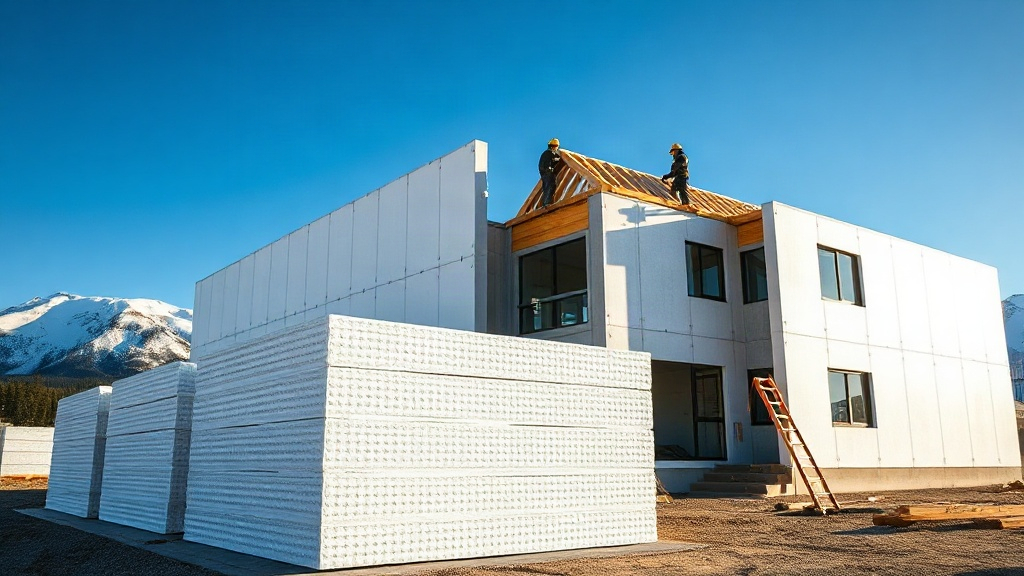
When the mercury dips to -30°C in Winnipeg or the coastal rain hammers Vancouver, your building's envelope has to work harder than almost anywhere else in the world. That's where EPS insulation steps in. Expanded polystyrene isn't just cheap white foam; it's a proven, moisture-resistant insulation that has kept Canadian structures comfortable and energy-efficient for decades. In this guide, we'll unpack how EPS performs in real Canadian conditions, why it's the go-to core for sandwich panels Canada projects, and how insulated roof panels leverage EPS to slash heating bills. Whether you're a contractor, architect, or a homeowner planning a build, you'll walk away with practical knowledge to make smarter insulation decisions.
What Makes EPS Insulation Ideal for Canadian Climates?
Canada's climate is a rollercoaster: frigid winters, humid summers, and freeze-thaw cycles that can destroy lesser materials. EPS insulation shines because its closed-cell structure resists moisture absorption. Unlike some fibrous insulations that sponge up water and lose R-value, EPS keeps its thermal performance even when exposed to damp conditions. That matters when you consider that a 2016 study by the National Research Council of Canada found that moisture accumulation can reduce the effective R-value of some insulations by up to 50%. EPS, with its low water vapor permeability and stable structure, sidesteps that problem.
Another advantage is EPS's consistent R-value per inch, typically around R-4 per inch at 75°F. In colder temperatures, EPS actually performs slightly better than extruded polystyrene (XPS) in terms of R-value retention, according to research from Oak Ridge National Laboratory. For Canadian builders, that means you can achieve high thermal resistance without excessive thickness, saving valuable interior space.
Moisture Resistance and Freeze-Thaw Durability
Freeze-thaw cycles are the silent killer of building envelopes. Water seeps into cracks, freezes, expands, and gradually destroys the structure. EPS insulation, when properly installed, doesn't absorb significant water, so it won't contribute to this cycle. In fact, its closed-cell nature means that even if water penetrates the outer cladding, the EPS core remains dry and functional. This is a key reason why EPS is often used in below-grade applications and roofing systems across Canada.
Thermal Performance That Lasts
EPS doesn't degrade over time. Unlike polyurethane insulation, which can off-gas and lose R-value, EPS maintains its thermal properties for the life of the building. That's why many Canadian building codes, such as the National Building Code of Canada, recognize EPS as a durable insulation option. For long-term energy savings, EPS is a safe bet.
Sandwich Panels Canada: Why EPS Is the Core of Choice
If you've driven past a construction site in Toronto or Calgary recently, you've likely seen sandwich panels being hoisted into place. These panels consist of two rigid facings (often metal, but sometimes fiberglass or OSB) bonded to an insulating core. EPS is the most common core material for several reasons: it's lightweight, cost-effective, and offers excellent thermal performance. When we talk about sandwich panels Canada wide, EPS cores dominate because they deliver the best balance of insulation value and structural integrity per dollar.
But not all EPS cores are created equal. Density matters. For wall panels, a density of 1.0 to 1.5 pounds per cubic foot (pcf) is typical, while roof panels often use higher densities (1.5 to 2.0 pcf) to handle foot traffic and snow loads. The bonding process is critical too: a strong adhesive ensures the facings and core act as a composite, providing rigidity and resistance to wind uplift.
Structural Integrity and Load-Bearing Capacity
EPS sandwich panels are surprisingly strong. The facings carry tensile and compressive stresses, while the EPS core resists shear forces. This composite action allows the panels to span significant distances without sagging. In Canada, where snow loads can exceed 50 pounds per square foot in some regions, engineers specify panel thickness and core density to meet these demands. For example, a 6-inch thick EPS sandwich panel with 1.5 pcf core can typically span up to 10 feet when used as a roof panel under moderate snow loads. Always consult a structural engineer for your specific project.
Energy Efficiency and Cost Savings
Heating costs in Canada are no joke. A well-insulated building envelope using EPS sandwich panels can reduce heating energy consumption by 30-40% compared to traditional stick-built walls with fiberglass batt insulation. The continuous insulation provided by sandwich panels eliminates thermal bridging, a major source of heat loss. Over a 20-year period, the savings can easily offset the initial material cost. Plus, many Canadian provinces offer energy rebates for high-performance building envelopes, making EPS sandwich panels an even smarter investment.
Insulated Roof Panels: The EPS Advantage
Roofs are the most vulnerable part of any building envelope. They face direct sun, rain, snow, and temperature swings. Insulated roof panels with EPS cores are engineered to handle all of that while keeping your interior comfortable. These panels are typically thicker than wall panels, ranging from 4 to 12 inches, to achieve the high R-values required by Canada's energy codes. For instance, the 2020 National Energy Code for Buildings (NECB) requires roof assemblies in most climate zones to achieve an effective R-value of R-40 or higher. EPS roof panels can meet this with ease.
One often-overlooked benefit of EPS roof panels is their acoustic performance. The foam core dampens sound transmission, making them ideal for buildings near airports or busy roads. Additionally, EPS doesn't support mold growth, which is a concern in humid Canadian summers.
Installation Tips for Canadian Roofs
Installing insulated roof panels in Canada requires attention to detail. Here are some best practices:
- Vapor barrier placement: In cold climates, the vapor barrier should be on the warm side of the insulation to prevent condensation. With EPS roof panels, the panel itself often acts as the vapor barrier if the facings are impermeable.
- Fastening: Use screws with neoprene washers to prevent water infiltration. Follow the manufacturer's fastener spacing guidelines, especially in high-wind zones.
- Thermal breaks: Avoid penetrating the panel with uninsulated structural members. Use thermal blocks where necessary.
- Snow guards: In snow-prone areas, install snow guards to prevent sudden snow slides that can damage gutters or injure people below.
These steps ensure your roof performs as designed and lasts for decades.
Comparing EPS to Other Insulation Materials
How does EPS stack up against polyurethane (PUR), polyisocyanurate (PIR), and mineral wool? Each has pros and cons, but EPS holds its own:
- R-value per inch: EPS: R-4; PUR/PIR: R-6 to R-7; Mineral wool: R-3.5. EPS requires more thickness for the same R-value, but its cost per R is lower.
- Moisture resistance: EPS and XPS are closed-cell and resist moisture well. Mineral wool is vapor-open but can absorb water if not protected.
- Cost: EPS is the most affordable, often 20-30% cheaper than PUR/PIR.
- Environmental impact: EPS is recyclable and uses less blowing agent with low global warming potential compared to some foam plastics.
For Canadian projects where budget and performance are balanced, EPS is frequently the winner.
Frequently Asked Questions About EPS Insulation
How does EPS insulation perform in extreme cold?
EPS retains its R-value well in cold temperatures, actually improving slightly as temperatures drop. It remains flexible and won't become brittle, unlike some rigid foams. This makes it reliable for Canadian winters.
Can EPS sandwich panels be used for both walls and roofs?
Yes, EPS sandwich panels are versatile. Wall panels are typically thinner (2-6 inches) while roof panels are thicker (4-12 inches) to handle snow loads and higher R-value requirements. Both use similar manufacturing processes.
What is the fire performance of EPS insulation?
EPS contains flame retardants and will self-extinguish when the ignition source is removed. However, it should be protected by a fire-rated barrier such as gypsum board or metal facings. Always check local building codes for fire safety requirements.
How long does EPS insulation last?
EPS insulation can last 50 years or more without significant degradation. It doesn't rot, mold, or support vermin. When properly installed, it will outlast the building itself.
Is EPS insulation environmentally friendly?
EPS is recyclable and can be reprocessed into new products. It has a lower embodied energy than many alternatives and does not use CFCs or HCFCs in its manufacture. Some manufacturers offer EPS with recycled content.
Choosing the right insulation for Canadian buildings is a decision that pays off for years. EPS insulation, whether in sandwich panels or insulated roof panels, offers a proven combination of thermal performance, moisture resistance, and affordability. By understanding how EPS works and how to install it correctly, you can build structures that stay warm in winter, cool in summer, and energy-efficient all year round.