
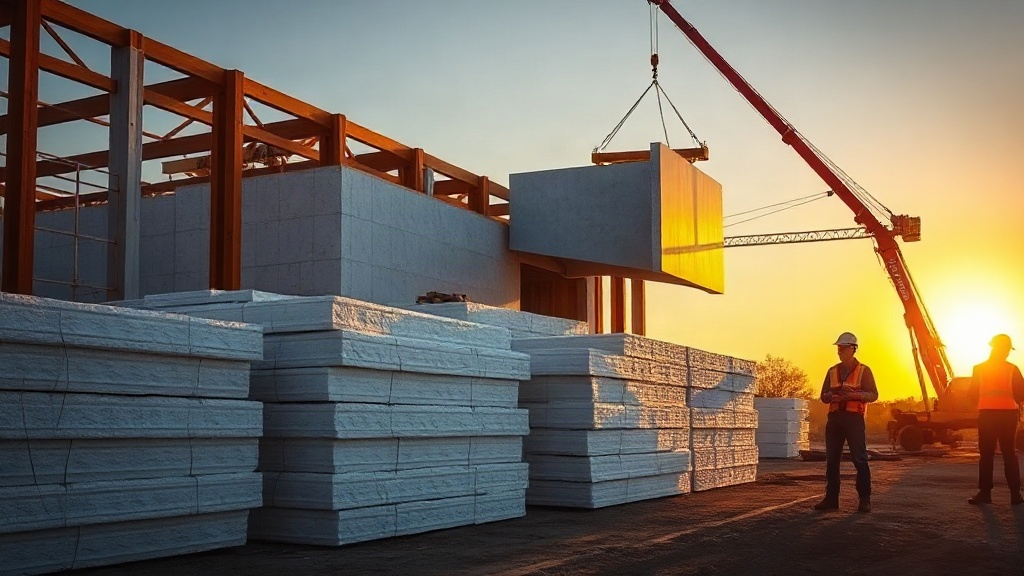
When you're standing on a job site in February, watching frost creep into the framing, the last thing you want is an insulation material that promises the world and delivers a drafty wall. EPS insulation has quietly become the workhorse of modern building envelopes, especially in panelized systems. Unlike spray foams that require specialized crews and curing time, EPS arrives ready to install, dimensionally stable, and predictable. In this guide, I'll share what I've learned from years of specifying and installing EPS-based panels, including how they compare to other cores and where they make the most sense.
What Exactly Is EPS Insulation?
Expanded polystyrene (EPS) is a rigid foam made from polystyrene beads that are pre-expanded with steam and then molded into blocks or shapes. The result is a closed-cell structure that's about 98% air. That trapped air is what slows heat transfer. The material itself is lightweight, but don't let that fool you; when laminated to structural skins like oriented strand board (OSB) or steel, it becomes part of a remarkably strong composite.
One common misconception is that EPS is the same as Styrofoam. Styrofoam is actually extruded polystyrene (XPS), which has a different manufacturing process and slightly higher R-value per inch. EPS, however, offers a better cost-to-performance ratio and is easier to recycle in many regions. For most residential and light commercial walls, EPS hits the sweet spot.
Why EPS Cores Are Gaining Ground in Panel Systems
Walk through any major building supply yard in North America and you'll notice a shift. Prefabricated wall and roof panels are no longer a niche product. Builders are turning to them for speed, consistency, and energy code compliance. At the center of many of these panels is an EPS core.
Here's why that matters. EPS insulation can be manufactured in large blocks and cut to precise dimensions. That means panel fabricators can produce custom thicknesses without excessive waste. It also bonds well with adhesives used for structural skins, creating a monolithic panel that resists delamination. And because EPS doesn't absorb water like some fibrous insulations, it maintains its R-value even in humid climates.
If you're sourcing components for a project in the Great White North, you've probably come across sandwich panels Canada suppliers offer. Many of them use EPS because it handles freeze-thaw cycles without crumbling. The closed-cell structure prevents moisture migration, so ice lenses don't form inside the panel. That's a big deal when winter lasts six months.
EPS vs. Other Core Materials: A Practical Comparison
Choosing a panel core isn't about picking the "best" material in a vacuum. It's about matching performance to your project's priorities. Here's how EPS stacks up against polyurethane (PUR), polyisocyanurate (PIR), and mineral wool.
- R-value per inch: EPS typically ranges from R-3.6 to R-4.2 per inch, depending on density. PUR and PIR can reach R-6 to R-7 per inch, but at a higher cost.
- Moisture resistance: EPS has excellent moisture resistance but is not a vapor barrier. PIR often includes foil facers that act as vapor retarders. Mineral wool is vapor-open but can absorb water if exposed.
- Fire performance: EPS can be treated with flame retardants to meet building codes. Mineral wool offers superior fire resistance, but at a weight and cost premium.
- Cost: EPS is generally the most affordable core option, making it ideal for budget-conscious projects that still need solid thermal performance.
- Environmental impact: EPS is recyclable in many areas, and some manufacturers now offer bio-based or recycled content versions.
In my experience, EPS shines in wall applications where thickness isn't severely constrained. If you need a thinner wall with a higher R-value, PIR might be worth the extra cost. But for roofs and walls where you can spare a few extra inches, EPS delivers reliable performance without breaking the bank.
Insulated Roof Panels: Where EPS Really Shines
Roofs are the most punishing part of any building envelope. They take the brunt of solar gain, wind uplift, and thermal cycling. That's why insulated roof panels have become a go-to solution for everyone from homeowners finishing a garage to architects designing a commercial warehouse.
EPS-cored roof panels offer several advantages. First, they're lightweight, which reduces structural load and makes installation faster. Second, they provide continuous insulation across the entire roof surface, eliminating thermal bridging through rafters. Third, they can be manufactured with integrated weather barriers and finished surfaces, so you're not layering multiple products on site.
I recently consulted on a project in Alberta where the owner wanted to convert an unheated shop into a year-round workspace. We specified 6-inch EPS-cored insulated roof panels with a steel skin. The panels arrived pre-cut, and a crew of three had the roof watertight in two days. The owner reported a 40% reduction in heating costs the first winter compared to the previous year with batt insulation. That's not a scientific study, but it's a real-world result that echoes what I've seen on dozens of jobs.
Installation Tips for EPS Panel Systems
Even the best panel can underperform if it's installed poorly. Here are some field-tested practices to get the most out of EPS insulation in panel form.
- Store panels flat and dry. EPS is moisture resistant, but the skins and adhesives can be compromised by prolonged exposure to standing water. Keep panels on dunnage and covered until installation.
- Seal joints meticulously. Air leakage is the enemy of any insulation system. Use high-quality sealants or gaskets at panel joints, and don't rely on the panel's tongue-and-groove alone.
- Control thermal bridging at connections. Where panels meet structural framing, use thermal breaks or insulated spacers. This is especially important at roof-to-wall junctions.
- Allow for expansion and contraction. EPS has a moderate coefficient of thermal expansion. Follow manufacturer guidelines for fastener spacing and panel gaps.
- Protect exposed edges. During construction, exposed EPS can be damaged by UV or physical impact. Cover it promptly with trim or flashing.
Common Misconceptions About EPS Insulation
Let's clear the air. I've heard plenty of myths over the years, and they can lead to bad decisions.
Myth: EPS doesn't perform well in cold climates. Reality: EPS maintains its R-value better than XPS in cold, wet conditions because it doesn't absorb water as readily. It's a staple in Canadian construction for a reason.
Myth: EPS is a fire hazard. Reality: Modern EPS for construction is treated with flame retardants and meets stringent fire codes. When used in a properly designed assembly with fire-rated skins, it performs well.
Myth: EPS is bad for the environment. Reality: EPS is recyclable, and its lightweight nature reduces transportation emissions. Many manufacturers now use recycled content or bio-based raw materials.
Frequently Asked Questions
How does EPS insulation compare to spray foam for wall panels?
EPS panels offer consistent thickness and R-value, faster installation, and lower cost. Spray foam can achieve higher R-values per inch and fills irregular cavities better, but it requires specialized equipment and curing time. For panelized construction, EPS is often the more practical choice.
Can EPS insulated roof panels be used in high-snow-load areas?
Yes, but the panel system must be engineered for the specific snow load. EPS itself is not structural; the load is carried by the skins and the supporting structure. Work with a structural engineer to specify panel thickness and fastener schedule.
What is the typical R-value of an EPS sandwich panel?
R-value depends on core thickness and density. A 4-inch EPS core might provide around R-16, while a 6-inch core can reach R-24. Always check the manufacturer's data for exact values.
Are EPS panels suitable for both walls and roofs?
Absolutely. EPS-cored panels are used for exterior walls, interior partitions, and roofs. The same core material can be paired with different skins to meet specific structural and aesthetic requirements.
How do I find reliable sandwich panels in Canada?
Look for suppliers with a track record in your climate zone. Ask for project references, especially in similar applications. Reputable manufacturers will provide technical data, including thermal performance, fire ratings, and installation guidelines.
EPS insulation isn't a magic bullet, but it's a proven, practical solution for builders who value performance, speed, and cost control. Whether you're specifying insulated roof panels for a commercial build or sandwich panels Canada homeowners use for a garage conversion, understanding the material helps you make better decisions. Take the time to plan your assembly, seal it tight, and you'll reap the benefits for decades.