
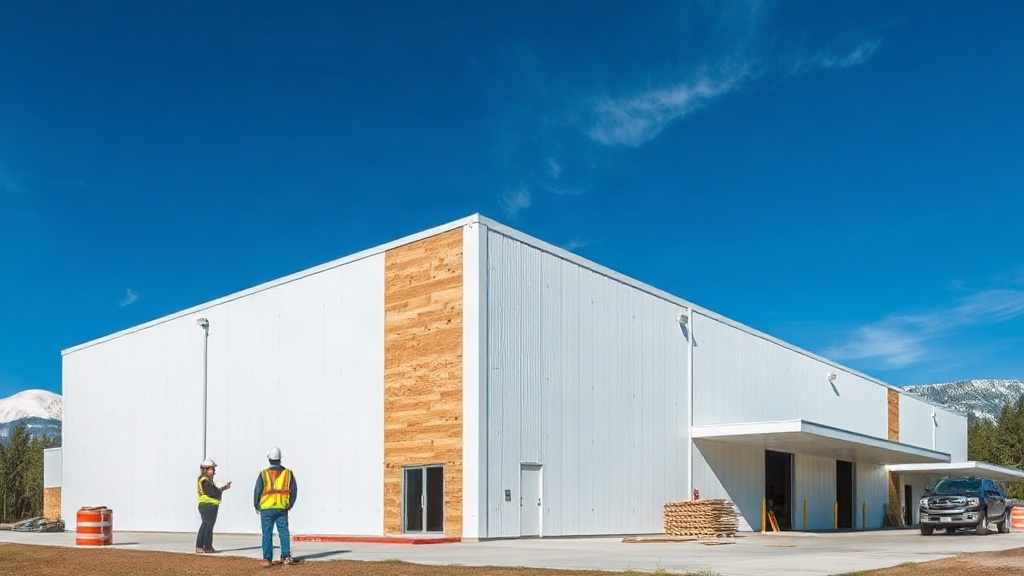
When you're planning a building project in Canada, whether it's a cold storage facility in Manitoba or a retail space in Nova Scotia, the envelope you choose determines everything from energy bills to indoor comfort. Among the many options, EPS insulation has quietly become a cornerstone of high-performance building systems, especially when paired with sandwich panels Canada wide. But what makes this combination so effective, and why are more contractors and architects specifying it for both walls and roofs? Let's cut through the noise and look at what really matters.
Why EPS Insulation Stands Out in Canadian Construction
Expanded polystyrene, or EPS, is a rigid foam made from styrene monomers. It's lightweight, moisture-resistant, and offers consistent thermal performance. In Canada, where temperature swings can range from -40°C in January to +35°C in July, insulation must perform reliably year-round. EPS does exactly that: its closed-cell structure resists water absorption, and its R-value per inch remains stable over time, unlike some fibrous materials that can settle or degrade.
What sets EPS apart for sandwich panels is its ability to be molded into precise shapes and densities. Manufacturers can tailor the foam's thickness and density to meet specific thermal targets, whether you need R-12 for a partition wall or R-40 for a roof in a northern climate. This flexibility means you're not stuck with a one-size-fits-all solution; you get exactly the performance your project demands.
Thermal Performance That Holds Up
EPS typically delivers R-values between 3.6 and 4.2 per inch, depending on density. For a 4-inch panel, that's roughly R-14 to R-17. While polyurethane (PUR) and polyisocyanurate (PIR) offer higher R-values per inch, EPS remains competitive because it maintains its R-value better in cold temperatures. In fact, studies show that EPS loses less than 2% of its thermal resistance at -20°C, whereas some other foams can lose up to 10%. That matters when you're heating a warehouse in Edmonton or a greenhouse in Ontario.
Sandwich Panels Canada: The EPS Advantage
Sandwich panels Canada manufacturers have embraced EPS for good reason. These panels consist of two rigid facings (often steel, aluminum, or fiberglass) bonded to an insulating core. EPS is an ideal core material because it's cost-effective, easy to handle, and provides excellent structural integrity when laminated. The result is a panel that's strong, lightweight, and quick to install.
In Canada, sandwich panels with EPS cores are used in a variety of applications: cold storage, agricultural buildings, commercial facades, and even residential retrofits. The panels arrive pre-finished, so you avoid the labor and mess of applying insulation on-site. Plus, the factory-controlled bond between the EPS and the facings ensures consistent quality that field assembly can't match.
Comparing EPS to Other Core Materials
When choosing a core, it's natural to weigh EPS against mineral wool, PUR, and PIR. Here's a quick breakdown:
- EPS: Lowest cost, good R-value, moisture-resistant, lightweight. Best for budget-conscious projects with moderate thermal requirements.
- Mineral wool: Non-combustible, excellent fire performance, but heavier and more expensive. Ideal for high-fire-risk zones.
- PUR/PIR: Higher R-value per inch, but higher cost and slightly more moisture-sensitive. Often used where space is tight.
For many Canadian projects, EPS hits the sweet spot between performance and affordability. It's also worth noting that EPS is 100% recyclable, which aligns with green building goals.
Insulated Roof Panels: The EPS Edge
When it comes to roofing, insulated roof panels with EPS cores are a smart choice for flat and low-slope roofs. These panels provide continuous insulation, eliminating thermal bridging that can occur with traditional roof assemblies. In Canada, where snow loads are a serious consideration, EPS panels can be engineered to handle heavy loads without compromising thermal performance.
One of the biggest advantages of EPS in roof panels is its resistance to moisture. Unlike some insulations that wick water and lose R-value when wet, EPS doesn't absorb water. This means that even if there's a minor leak or condensation, the panel's thermal efficiency remains largely intact. That's a critical factor for Canada's freeze-thaw cycles, where trapped moisture can lead to ice dams and structural damage.
Installation Tips for Roof Panels
Installing insulated roof panels with EPS cores requires attention to detail. Here are a few best practices:
- Proper flashing: Ensure all seams and penetrations are properly flashed to prevent water ingress. Use compatible sealants and tapes.
- Ventilation: Although EPS panels are moisture-resistant, adequate ventilation beneath the roof deck can help manage humidity.
- Fastening: Use screws with washers designed for sandwich panels. Over-tightening can crush the EPS core, reducing thermal performance.
- Thermal breaks: Where panels meet structural supports, consider adding thermal breaks to minimize heat loss.
These steps not only extend the life of your roof but also ensure you get the energy savings you paid for.
Real-World Applications Across Canada
From British Columbia to Newfoundland, EPS sandwich panels are proving their worth. In Vancouver, a cold storage facility used 6-inch EPS panels to maintain -25°C interiors while withstanding the rainy climate. In Calgary, a distribution center chose EPS roof panels to handle heavy snow loads and temperature fluctuations. In Quebec, a dairy farm utilized EPS wall panels for their excellent moisture resistance and easy-clean surfaces.
These examples show that EPS isn't just a budget option; it's a performance option that adapts to diverse Canadian conditions.
Frequently Asked Questions
How does EPS insulation perform in extreme cold?
EPS maintains its R-value exceptionally well in cold temperatures. Unlike some foams that lose thermal resistance as temperatures drop, EPS experiences minimal loss, making it reliable for Canadian winters. Independent testing shows that at -20°C, EPS retains over 98% of its thermal performance.
Are EPS sandwich panels fire-rated?
EPS is combustible and should be protected in fire-rated assemblies. However, when sandwiched between steel facings, the panel can achieve fire ratings depending on the overall system. It's crucial to check local building codes and choose panels with appropriate fire certifications for your application.
Can EPS insulated roof panels be used for retrofitting existing roofs?
Yes, EPS roof panels are often used in retrofits because they are lightweight and can be installed over existing roofs, saving on disposal costs. However, a structural assessment is recommended to ensure the existing structure can handle the additional load.
What is the typical lifespan of EPS sandwich panels?
With proper installation and maintenance, EPS sandwich panels can last 30 to 50 years or more. The steel facings are durable and corrosion-resistant, and the EPS core does not degrade or lose R-value over time when kept dry.
How do EPS panels compare in cost to other insulation options?
EPS is generally the most cost-effective core material for sandwich panels. While PUR and PIR offer higher R-values per inch, EPS provides a better cost-per-R-value ratio, making it ideal for projects with budget constraints. However, total project costs depend on factors like panel thickness, facings, and installation.
Choosing the right insulation for your Canadian building project is a decision that will impact energy efficiency, comfort, and longevity. EPS insulation in sandwich panels and insulated roof panels offers a proven, practical solution that stands up to Canada's climate. By understanding its benefits and limitations, you can make an informed choice that delivers value for years to come.