
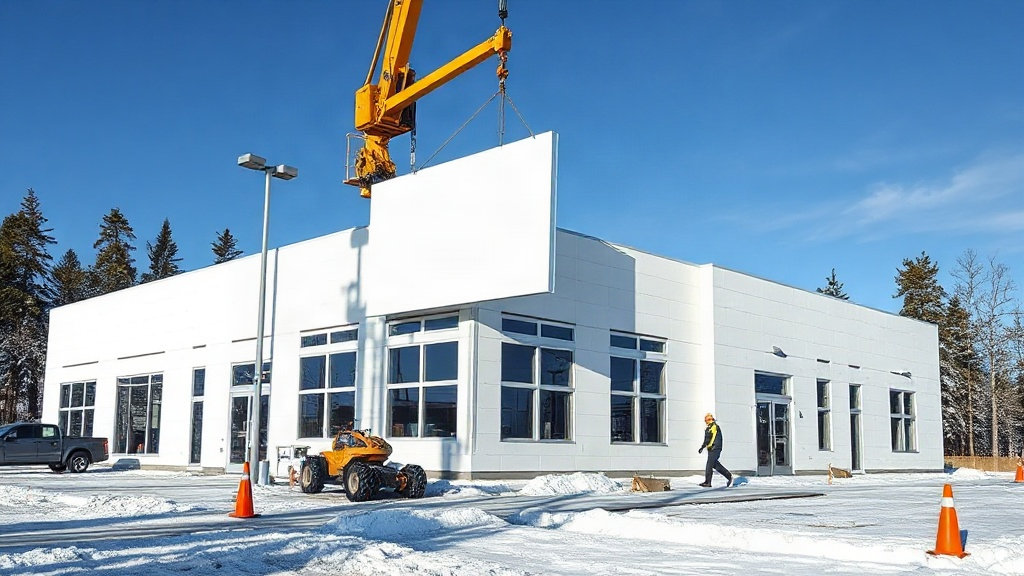
When you're building in Canada, you quickly learn that insulation isn't just a nice-to-have; it's the difference between a comfortable, energy-efficient structure and a money pit. I've spent years working on construction sites from Vancouver to Halifax, and one material that consistently stands out is EPS insulation. It's the quiet workhorse behind many high-performance building envelopes, especially when integrated into sandwich panels. If you're planning a project, whether it's a cold storage facility in Manitoba or a commercial warehouse in Ontario, understanding how EPS performs in Canadian conditions can save you time, money, and a lot of headaches.
Why EPS Insulation Is a Smart Choice for Canadian Climates
Canada's climate is brutal on buildings. From -40°C winters in the Prairies to damp, coastal conditions in British Columbia, your insulation has to handle extreme temperature swings without breaking a sweat. EPS, or expanded polystyrene, is a closed-cell foam made from styrene polymer. It's lightweight, rigid, and packed with millions of air pockets that resist heat flow. Unlike some other insulation types, EPS doesn't absorb water easily, which means it won't lose its R-value when exposed to moisture. That's a big deal when you're dealing with freeze-thaw cycles.
I remember a project in Alberta where we used EPS core panels for a large agricultural building. The client was worried about condensation and mold, but the EPS held up beautifully. The key is its dimensional stability; it doesn't shrink or expand much with temperature changes. That means your panels stay tight, and you avoid the air leaks that can plague other systems. For Canadian builders, EPS offers a reliable, cost-effective way to meet the stringent energy codes we see in provinces like Ontario and Quebec.
How Sandwich Panels Canada Leverage EPS Core Technology
If you've ever priced out sandwich panels Canada suppliers offer, you know there's a lot of variety. The magic happens in the core. A sandwich panel typically consists of two rigid facings, like steel or aluminum, bonded to an insulating core. When that core is EPS, you get a composite that's strong, lightweight, and thermally efficient. The facings provide structural integrity and weather resistance, while the EPS core does the heavy lifting on insulation.
One of the biggest advantages of EPS-core sandwich panels is their versatility. They can be used for walls, roofs, and even floors. In Canada, we often see them in cold storage warehouses, where maintaining a consistent temperature is critical. The panels are prefabricated in a factory, so you get precise dimensions and consistent quality. On-site, they go up fast, which reduces labor costs and construction time. I've seen crews install hundreds of square feet in a day, something that's just not possible with traditional stick-built insulation.
Thermal Performance That Meets Canadian Standards
EPS insulation typically has an R-value of about R-4 per inch. That might not sound like much compared to polyurethane, but when you factor in cost and moisture resistance, it's a compelling package. For a 6-inch panel, you're looking at roughly R-24, which is enough for many commercial and industrial applications. And because EPS doesn't degrade over time, that R-value stays consistent. I've pulled apart panels that were 20 years old and the EPS looked brand new.
When you're specifying insulated roof panels, you need to think about more than just R-value. You also need to consider structural load, fire performance, and code compliance. In Canada, the National Building Code sets minimum thermal requirements, but many projects aim higher for energy efficiency. EPS-core panels can be engineered to meet these requirements without adding excessive weight to the structure. That's a win for both engineers and owners.
Moisture Resistance: A Critical Factor for Canadian Buildings
Moisture is the enemy of insulation. In many parts of Canada, we deal with high humidity, rain, and snow. If your insulation gets wet, its performance plummets. EPS is inherently water-resistant, but the panel's design matters too. A quality sandwich panel will have sealed joints and properly designed facings to keep water out. I always recommend panels with tongue-and-groove edges and factory-applied gaskets. That combination creates a tight seal that prevents water infiltration.
Another thing to watch for is vapor drive. In heating-dominated climates like Canada, vapor tends to move from the warm interior to the cold exterior. If that vapor gets trapped in the insulation, it can condense and cause problems. EPS has a relatively high vapor permeance, which means it allows some moisture to pass through rather than trapping it. That can be an advantage in certain assemblies, but it's always best to consult with a building science expert to ensure your wall or roof system is designed correctly.
Applications of EPS Insulation in Canadian Construction
EPS insulation and sandwich panels are used across a wide range of building types in Canada. Here are some of the most common:
- Cold storage facilities: These buildings require precise temperature control, and EPS panels provide excellent insulation with minimal thermal bridging.
- Commercial and industrial buildings: Warehouses, manufacturing plants, and retail spaces benefit from the fast installation and energy efficiency of sandwich panels.
- Agricultural buildings: Barns, poultry houses, and greenhouses use EPS panels to maintain stable indoor environments.
- Residential and modular homes: Some builders use EPS-core panels for walls and roofs in custom homes, especially where energy efficiency is a priority.
- Temperature-controlled environments: Laboratories, data centers, and food processing plants rely on EPS panels for reliable performance.
I've worked on a few of these project types, and the feedback from clients is always the same: they love the speed of installation and the predictable energy bills. One client in Saskatchewan told me their new EPS-panel warehouse cut their heating costs by nearly 40% compared to their old building. That's real money back in their pocket.
Installation Tips for EPS Sandwich Panels
Installing sandwich panels isn't rocket science, but it does require attention to detail. Here are some best practices I've picked up over the years:
- Plan your layout: Before you start, map out the panel layout to minimize cuts and waste. This also helps you identify where you'll need to penetrate the panels for doors, windows, or vents.
- Handle with care: EPS panels are lightweight but can be damaged if dropped or mishandled. Store them on a flat surface and protect the edges.
- Seal joints properly: Use the manufacturer's recommended sealants and gaskets. A tight seal is crucial for both thermal performance and moisture control.
- Allow for thermal movement: Panels expand and contract with temperature changes. Follow the manufacturer's guidance on fastening to allow for movement without compromising the seal.
- Inspect after installation: Check for any gaps or damage. Small issues can become big problems if left unaddressed.
One mistake I see too often is installers overtightening fasteners. That can compress the EPS core and create a thermal bridge. Always use the recommended torque and washers. Another tip: if you're installing roof panels, make sure the purlins are spaced correctly to support the panels and any snow loads. Canadian snow loads can be significant, so this is not a place to cut corners.
Comparing EPS to Other Insulation Materials
EPS isn't the only game in town. You might be considering polyurethane (PUR) or polyisocyanurate (PIR) panels. Here's a quick comparison:
- R-value per inch: PUR and PIR have higher R-values (around R-6 to R-7 per inch), but they cost more. EPS is typically R-4 per inch.
- Moisture resistance: EPS handles moisture well, but PIR can also perform well with proper facings. However, some PIR panels can absorb moisture over time if the facings are damaged.
- Cost: EPS is generally the most budget-friendly option, making it attractive for large projects.
- Environmental impact: EPS is recyclable and has a lower global warming potential compared to some foam insulations. Many manufacturers now offer EPS with recycled content.
- Fire performance: EPS can be treated with flame retardants to meet fire codes. Always check that your panels meet the required fire rating for your application.
For many Canadian projects, EPS hits the sweet spot between performance and affordability. If you need the absolute highest R-value per inch and have the budget, PUR or PIR might be worth it. But for the majority of applications, EPS gets the job done.
Frequently Asked Questions About EPS Insulation and Sandwich Panels
How does EPS insulation perform in extreme cold?
EPS insulation maintains its thermal performance in cold temperatures. Unlike some materials that become brittle, EPS remains stable and effective even at -40°C. The key is to ensure the panel joints are sealed to prevent air infiltration.
Can EPS sandwich panels be used for both walls and roofs?
Yes, EPS-core sandwich panels are suitable for both wall and roof applications. However, roof panels often require additional structural considerations for snow loads and may have different profiles for water drainage. Always specify panels designed for the intended application.
What is the fire rating of EPS sandwich panels?
Fire ratings vary by manufacturer and panel construction. Many EPS panels are available with fire-retardant additives and can achieve a Class A fire rating when tested according to ASTM E84. It's essential to verify the fire performance with the manufacturer and ensure it meets local building codes.
Are EPS sandwich panels energy-efficient enough for net-zero buildings?
EPS panels can contribute to net-zero goals, but they may need to be combined with other strategies like high-performance windows, airtight construction, and renewable energy systems. The thickness of the EPS core can be increased to achieve higher R-values. Consulting an energy modeler can help you determine the right specification.
How long do EPS sandwich panels last?
With proper installation and maintenance, EPS sandwich panels can last 30 to 50 years or more. The EPS core does not degrade over time, and the facings protect it from UV exposure and physical damage. Regular inspections and prompt repairs of any damage will maximize lifespan.
EPS insulation and sandwich panels are a proven combination for Canadian construction. They offer a balance of thermal performance, durability, and cost-effectiveness that's hard to beat. Whether you're building a new facility or retrofitting an existing one, consider EPS-core panels for your next project. With the right design and installation, they'll keep your building comfortable and efficient for decades.