
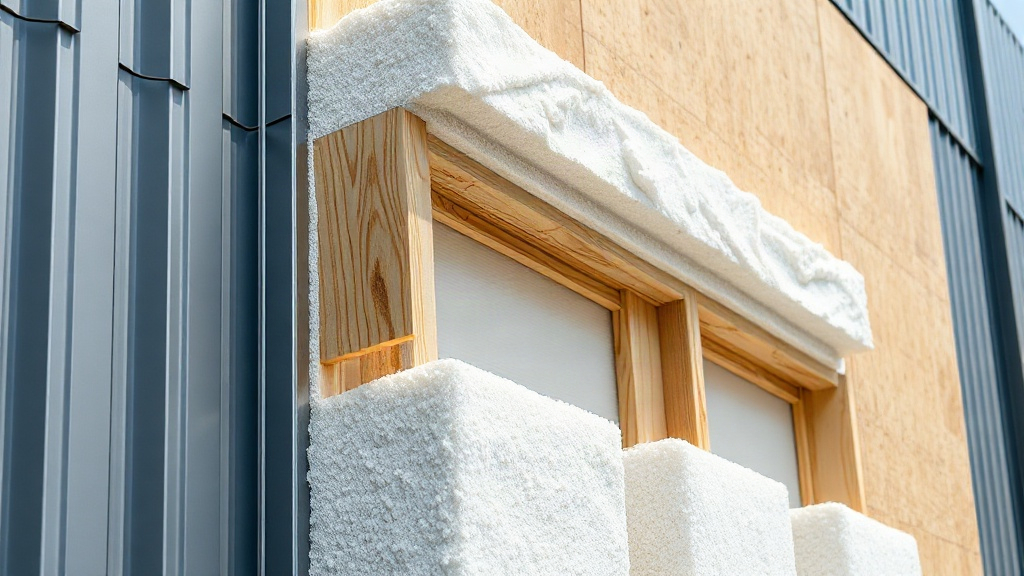
When it comes to building in Canada, where temperatures can swing from scorching summers to bitter winters, insulation is not just a nice-to-have; it's a necessity. Among the various insulation materials available, EPS insulation has quietly become a favorite for its balance of performance, cost, and versatility. But what exactly makes EPS stand out, and how does it fit into modern building systems like sandwich panels Canada? Let's dig into the details that matter for your next project.
What Is EPS Insulation and Why Does It Matter?
EPS, or expanded polystyrene, is a foam plastic made from styrene monomers. It's lightweight, rigid, and packed with millions of tiny air pockets that resist heat flow. Unlike some insulation types that rely on blowing agents with high global warming potential, EPS uses air as its primary insulating medium, making it an environmentally friendlier option. In Canada, where energy codes are tightening and utility bills are climbing, EPS offers a reliable way to meet thermal targets without breaking the bank.
But not all EPS is created equal. Density and manufacturing quality vary, and that affects R-value per inch. Typically, EPS ranges from R-3.6 to R-4.2 per inch, depending on density. For a 2-inch thick panel, that's around R-7 to R-8.4. When you stack multiple layers, the R-value adds up quickly. That's why EPS is often used in thick walls and roofs where space allows.
How EPS Insulation Works in Canadian Climates
Canada's climate zones are diverse: from the mild, rainy coasts of British Columbia to the extreme cold of the Prairies and the North. In all these regions, moisture management is critical. EPS has a closed-cell structure, meaning it resists water absorption better than open-cell foams like polyurethane. However, it's not a vapor barrier. In fact, EPS is vapor-permeable, which can be an advantage in walls that need to dry out. But it also means you need to pair it with proper air and vapor control layers to prevent condensation inside the assembly.
In practice, builders often use EPS in combination with other materials. For example, in a wall assembly, EPS might be the exterior continuous insulation, while the interior has a polyethylene vapor barrier. In roofs, EPS is frequently the core of insulated roof panels, sandwiched between metal skins. This brings us to the next point.
Sandwich Panels: The Perfect Partner for EPS
Sandwich panels Canada manufacturers produce are composite building elements made of two rigid faces (often metal, but sometimes plywood or OSB) bonded to a insulating core. EPS is one of the most common core materials because it's cost-effective, lightweight, and provides good thermal performance. These panels are prefabricated in a factory, which means consistent quality and faster on-site assembly. For Canadian projects, where labor costs are high and construction seasons are short, that speed is invaluable.
There are two main types: wall panels and roof panels. Wall panels typically have a tongue-and-groove joint for a tight seal, while roof panels often feature a standing seam profile for weathertightness. The EPS core can be customized in thickness to achieve the desired R-value. For instance, a 4-inch EPS core gives about R-16, while a 6-inch core bumps it to R-24. That's enough to meet many provincial energy codes, especially when combined with other insulation layers.
Why Choose EPS Over Other Cores?
You might wonder why EPS instead of polyisocyanurate (polyiso) or extruded polystyrene (XPS). Polyiso has a higher R-value per inch (around R-6), but it's more expensive and can lose some R-value in cold temperatures. XPS also performs well but is denser and heavier. EPS hits a sweet spot: it's affordable, performs consistently across temperatures, and is easy to work with. Plus, EPS is recyclable in many regions, and some manufacturers use recycled content.
Applications of EPS Insulation in Canadian Construction
EPS insulation isn't limited to sandwich panels. It's used in a variety of applications across Canada:
- Exterior walls: As rigid foam board, EPS provides continuous insulation over wood or steel framing, reducing thermal bridging.
- Roofs: In low-slope commercial roofs, EPS is often the insulation layer under the membrane. In steep-slope residential roofs, it can be used between rafters or as part of insulated roof panels.
- Foundations: EPS board is installed on exterior foundation walls to keep basements warm and reduce frost heave.
- Floors: In slab-on-grade construction, EPS under the slab provides a thermal break.
- Specialty structures: Cold storage rooms, agricultural buildings, and even some modular homes rely on EPS for its moisture resistance and thermal efficiency.
The versatility means that whether you're building a new home, retrofitting an old one, or putting up a commercial warehouse, EPS likely has a role to play.
Installation Tips for EPS Insulation and Sandwich Panels
Getting the most out of EPS requires attention to detail during installation. Here are some practical tips from experienced builders:
- Seal all joints: Gaps between panels or boards let air through, reducing effective R-value. Use compatible sealants or tape designed for foam.
- Manage moisture: While EPS resists water, it's not a waterproofing layer. Ensure proper flashing and drainage in roofs and walls.
- Avoid compression: EPS is rigid but can be crushed if over-compressed. Follow manufacturer guidelines for fastening and load limits.
- Protect from UV: EPS degrades when exposed to sunlight. In roof panels, the metal skin provides protection. For exposed foam board, cover it with cladding or a protective coating.
- Consider thermal bridging: Use continuous insulation and minimize penetrating fasteners where possible.
These steps might seem basic, but skipping them can lead to performance gaps that undermine your insulation investment.
Environmental Impact and Sustainability
EPS has a mixed reputation when it comes to the environment. On one hand, it's made from petroleum-based styrene, a non-renewable resource. On the other hand, it's lightweight (reducing transportation emissions), has low thermal conductivity (saving energy over its lifetime), and is recyclable in many Canadian cities. Some manufacturers now offer EPS with recycled content, and the industry is exploring bio-based alternatives. From a life-cycle perspective, the energy saved by insulating a building often far outweighs the embodied energy of the EPS itself.
When specifying EPS, look for products with third-party certifications like GREENGUARD or EcoLogo. These indicate low VOC emissions and responsible manufacturing. Also, check if your local recycling facility accepts EPS; if not, consider reusing offcuts for smaller projects.
Frequently Asked Questions About EPS Insulation
What is the R-value of EPS insulation?
EPS typically has an R-value of 3.6 to 4.2 per inch, depending on density. A 2-inch board provides around R-7 to R-8.4. For higher R-values, you can use thicker boards or multiple layers. Always check the product data sheet for specific values.
Can EPS insulation get wet?
EPS has a closed-cell structure that resists water absorption, but it is not waterproof. Prolonged exposure to water can degrade its performance. In wall and roof assemblies, it should be protected by proper flashing, drainage, and vapor control layers.
Is EPS insulation suitable for Canadian winters?
Yes, EPS performs well in cold temperatures. Unlike some foams, its R-value remains stable in cold conditions. However, it must be installed correctly to prevent condensation and thermal bridging. Many Canadian builders use EPS in conjunction with other insulation to meet code requirements.
How do sandwich panels with EPS compare to traditional insulation?
Sandwich panels with EPS cores offer faster installation, consistent quality, and often better thermal performance because they minimize thermal bridging. They are also lighter than concrete or masonry, reducing structural loads. However, they may have higher upfront material costs, though labor savings can offset that.
Are there any drawbacks to using EPS insulation?
EPS has lower R-value per inch than polyiso or XPS, so it requires more thickness for the same performance. It also needs protection from UV light and physical damage. Additionally, some people have concerns about the environmental impact of polystyrene production. However, when used properly, EPS is a durable and effective insulation material.
Final Thoughts: Making the Right Insulation Choice
Choosing insulation for a Canadian building involves weighing performance, cost, and environmental factors. EPS insulation offers a compelling package: good thermal resistance, moisture tolerance, and compatibility with modern building systems like sandwich panels. Whether you're specifying insulated roof panels for a commercial project or using EPS board in a residential retrofit, understanding how EPS works and how to install it correctly will pay off in energy savings and comfort for years to come.
If you're planning a project, talk to suppliers who specialize in EPS and sandwich panels. They can help you select the right thickness and configuration for your climate zone and building code. With the right approach, EPS can be a key part of a high-performance building envelope.